News ·
Halcyon rebuilt, and a whole lot more
This is the biggest update Gildrook has ever had. Halcyon has been rebuilt from the harbor up as a capital worth the name, magic is open to everyone, there’s a whole moor of giants to the east, a new quest in Gullhaven, and every Artisanry recipe has been gone over.
Halcyon was always meant to be the Society’s capital, and it never quite felt like one. It was a handful of grand buildings round a square. So I started again, and while I was at it I kept building everywhere else too. There’s a lot here, so here’s the short version first.
Halcyon
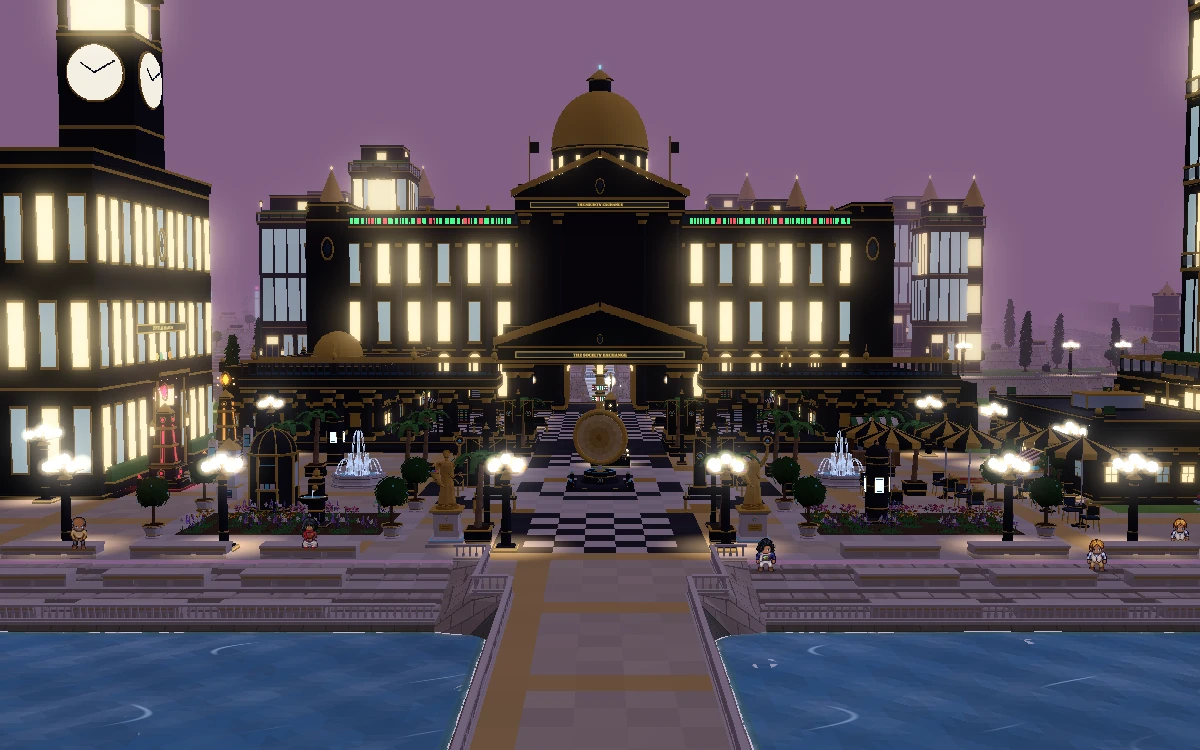
The new Halcyon climbs a hill. The Crown rises in terraces of white stone, with balustrades and grand stairs, from the harbor at its foot to the Spire on the summit. Teleport in and you land in Exchange Square, the city’s heart and the place to meet: the Gold Lens in the middle on its rosette of black and white marble, Central Station on one side, the hotel on the other, the Society Exchange ahead of you and the harbor at your back.
The Exchange is a great court now. Walk in through the portico onto the trading floor, where the Ticker’s prices run round a gilded column in light. Halcyon Bank fills its west side, and through the domed hall at the back the Exchange Arch opens onto the Founder’s Stair. It climbs all the way to the Spire, with the Cascade falling down its middle from pool to pool.
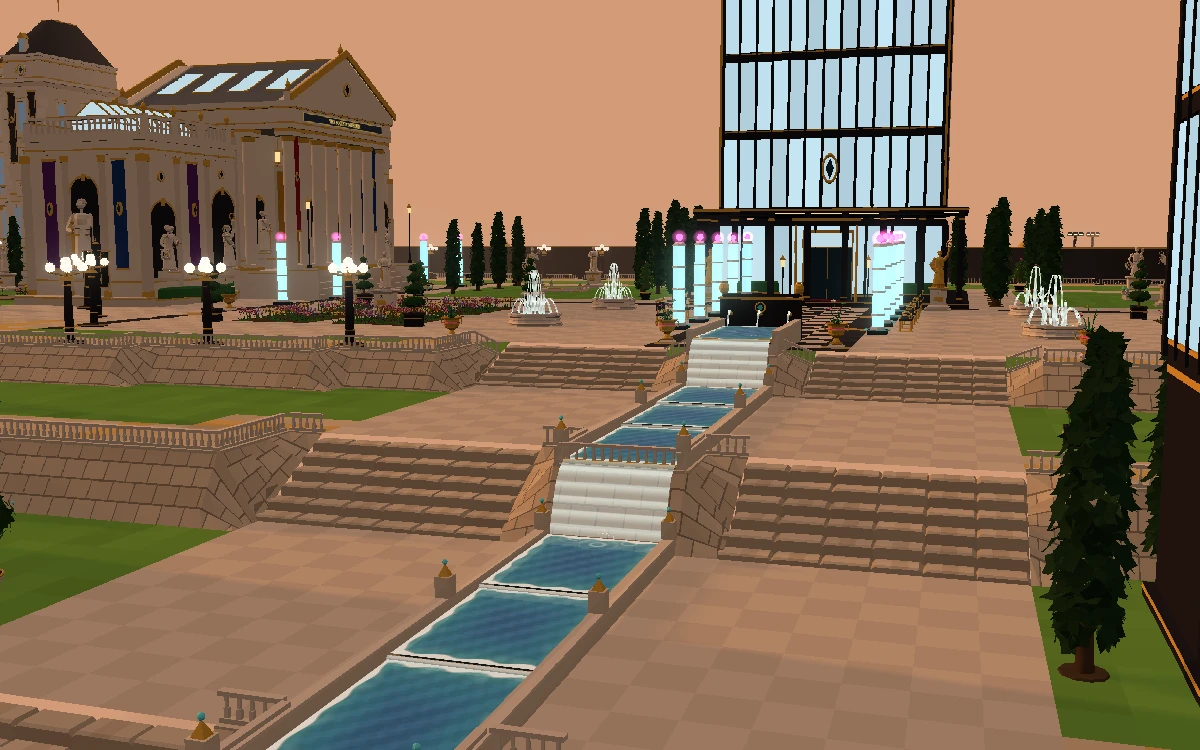
Spire Plaza on the summit sits between the Society Museum and the Chancery, with fountains, flower beds and white marble statues of Order, Industry and Plenty. From there the Crown Walk runs along the top of the hill, with benches looking out over the whole city.
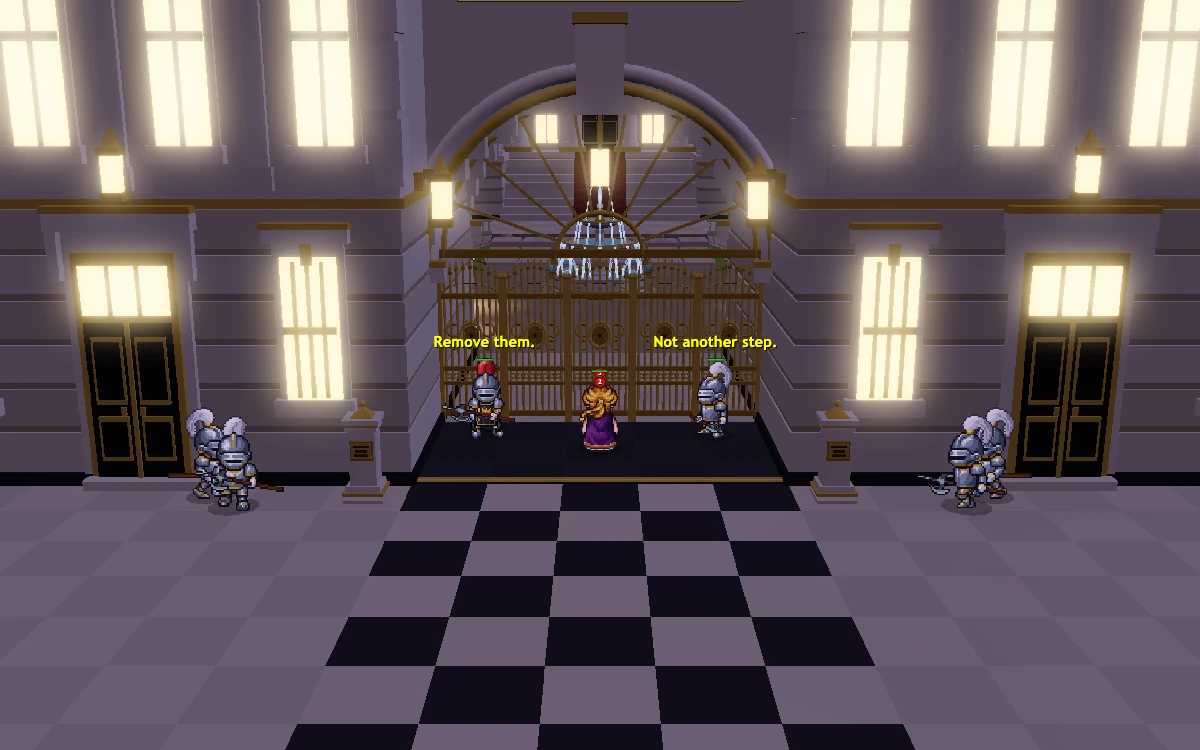
At the head of Founder’s Avenue, behind white marble walls, is the Residence: Lady Deatrix’s own house. You can look through the railings at her gardens, her great fountain and her glasshouse, but the gate is shut and the Residence Guard keep it. A gold line set in the paving marks how far you may go, and a brass plaque says so. I’d take its word for it. Try the gate and the whole guard turns out, and they don’t stop at a beating. They can’t be fought, so get out of the courtyard fast. If you don’t make it, at least what you drop is set down just short of the line, where you can pick it up again.
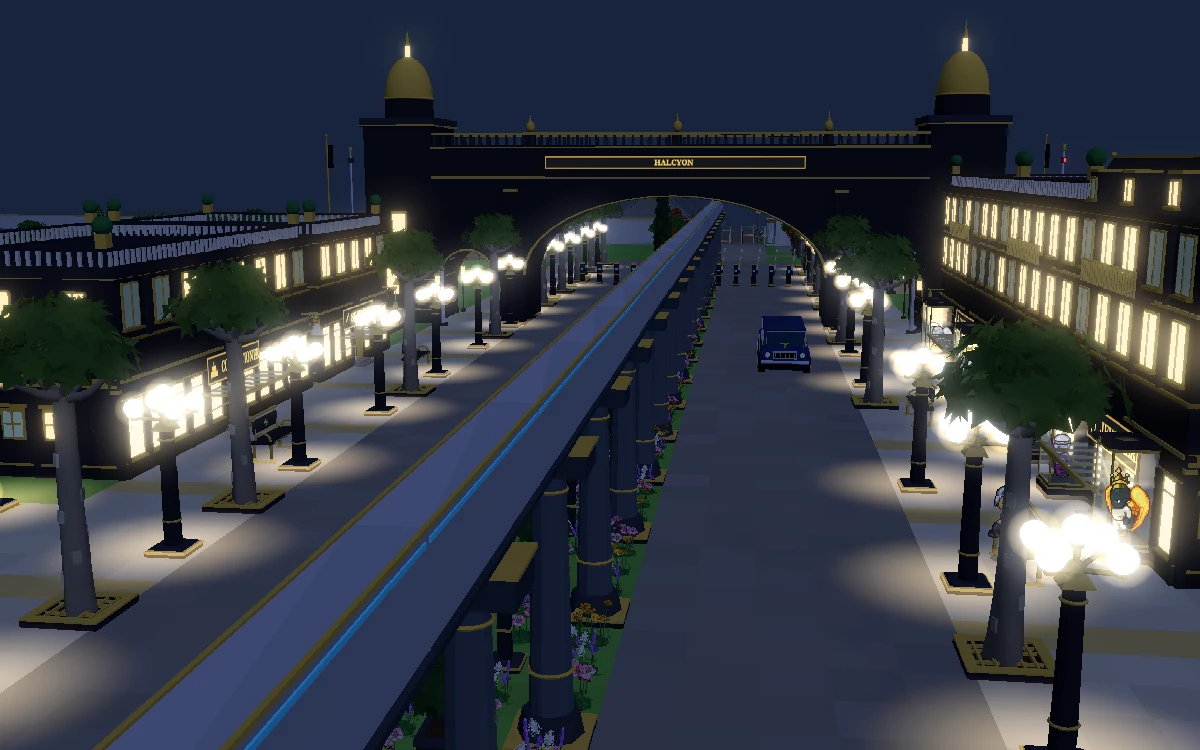
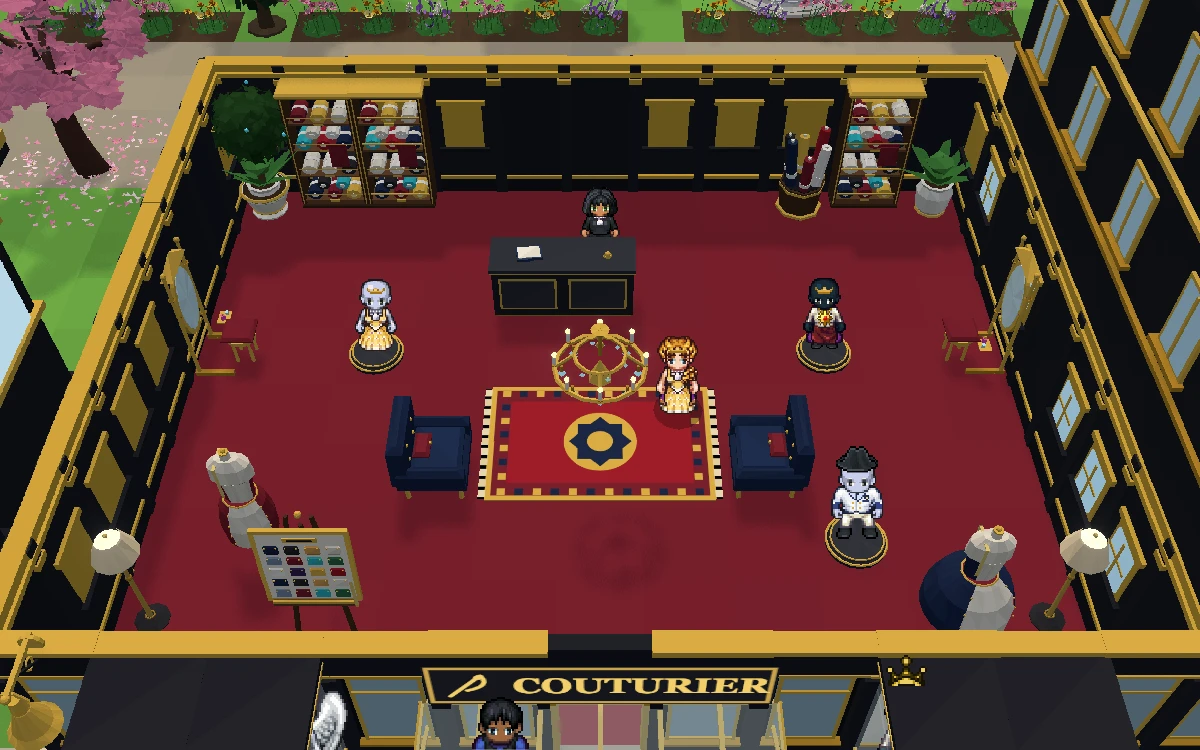
Concord Boulevard is the city’s high street, with the Amber Line running down the middle on its piers. The shops are ones you walk into now, with their keepers behind the counters: the Couturier, the Hatter, the Jeweler, Halcyon Furnishings and the Gallery on one side, the Stationer, the Confectioner’s tea room and a café on the other. Their windows show real outfits on mannequins, and after dark they light the street. Off the boulevard, the Galleria is an arcade under a glass roof with six more: the Clockmaker, the Chandlery, the Perfumer, the Bookseller, the Glover and the Tailor.
Round Halcyon Market are the Ateliers, the makers’ quarter: brick lanes and workshops open to the street, the milliner’s, the lacemaker’s, the dressmakers’ Atelier, the silversmith’s forge and the shoemaker’s, with silk drying across the dyers’ yard. Five of the workbenches in there are free for any Contractor to use, and there’s a bank chest on the market’s north side, a few steps away.
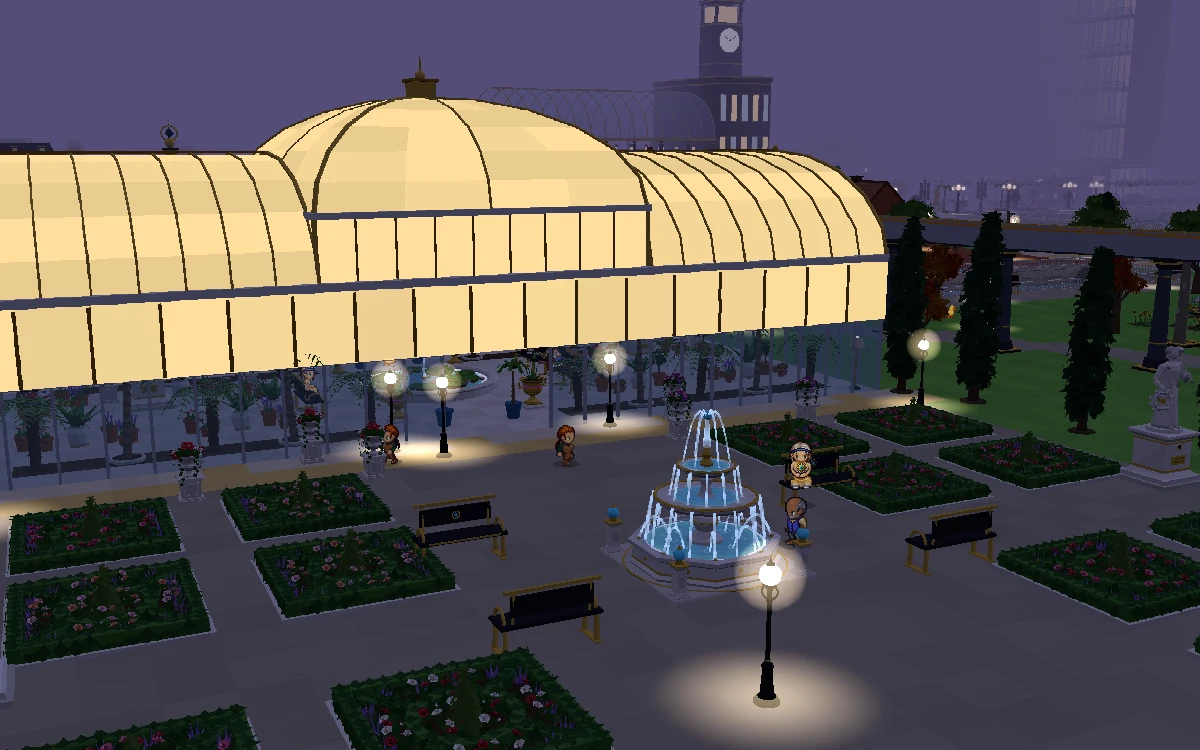
Concord Gardens is the city’s great park. The Long Water runs from the harbor through the lawns to a boating pond, where the boathouse keeps its skiffs and swan boats and the Gondolier waits by his gondola. There’s a bandstand among the deck chairs, a hedge maze with a statue at its middle, a rose garden, koi ponds and benches everywhere. The Palm House is a great glasshouse of palms and tree ferns round a pool of giant water lilies. Walk in through any of its four doors, and after dark it glows from inside.
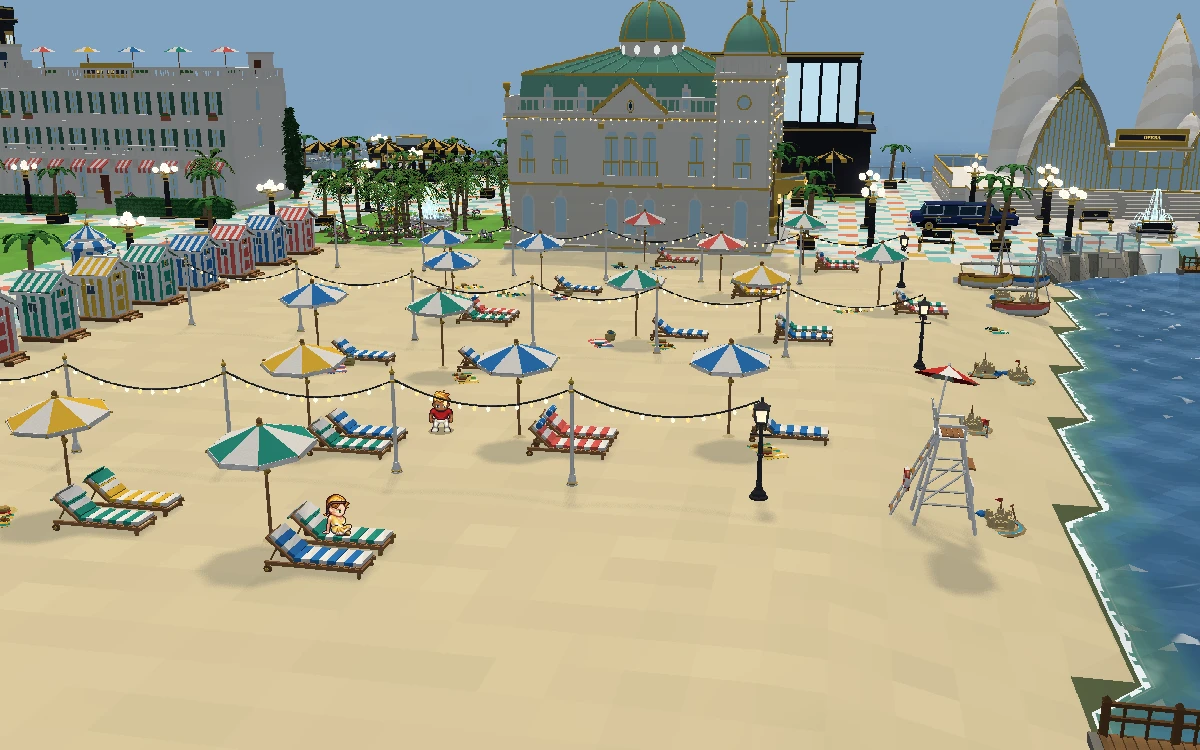
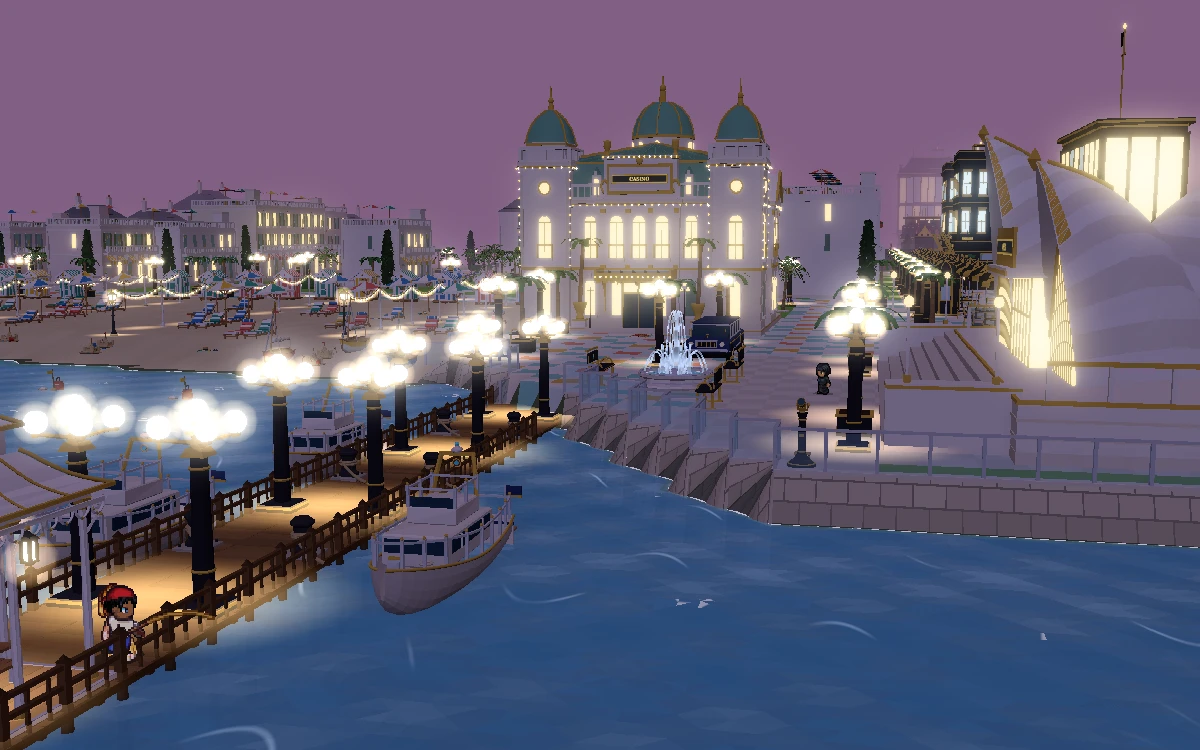
Out through the Sea Gate is the Esplanade, the city’s seaside: a bright mosaic promenade along the harbor behind a glass railing, palms in gold planters, telescopes, and white villas round a palm square. The Opera stands on the point at the harbor’s mouth, its white shells leaning out over the water. The Casino on the bay is lit all night, with the Ferry Pier running out before its doors. And the Lido is a beach of pale sand, with striped bathing huts, parasols, sun loungers you can lie on, sandcastles and a lifeguard in his tall chair.
Above the boulevard, the Heights are the city’s richest homes: big villas on terraces down the Crown’s west slope, each in its own garden behind a locked gilded gate. There’s a black marble villa with a gold loggia, a white one stepping up in terraces, a turreted mansion and a house of glass. You can’t go in, but you can look through the gates, and their residents will be standing there to watch you do it. On a bastion of the west wall, the Belvedere is a domed lookout over the Demesne Lake.
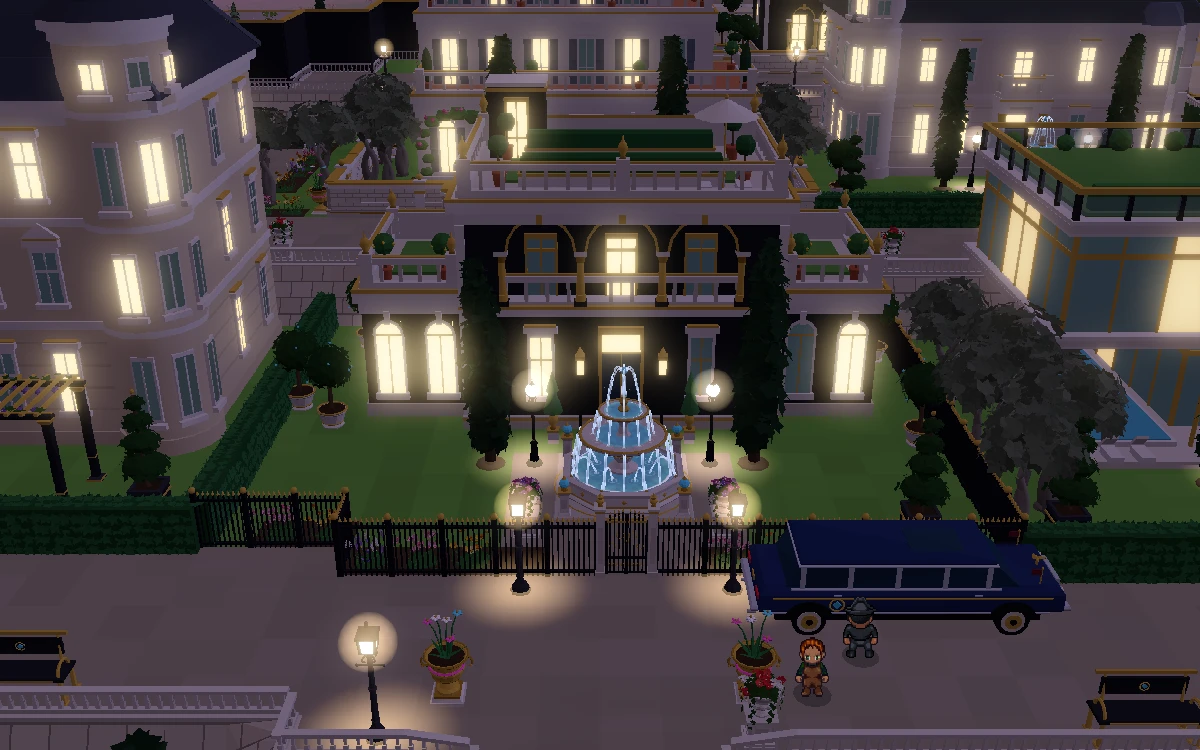
The Belvedere is one of a handful of lookouts round the city, along with the Crown Walk, the top of the Founder’s Stair, the end of the Ferry Pier and a few more. At a lookout you can tilt the camera much lower than anywhere else and see a long way further, and the one at the west end of the Crown Walk is the only place you can see Lady Deatrix’s house whole, over her garden wall.
There’s more. Southgate is where the Caravan Road comes in from the Badlands, with the caravan market under canvas and the Caravanserai, an inn round a courtyard where you can sit out the heat on the rugs. The Academy of Adventure has an Arena, the stonecutters work the marble beside the Quarry, and the city wall follows the hill, the river and the shore, with two great towers at the harbor’s mouth. The World Map names every district, and the smaller places as you zoom in.
Across the river
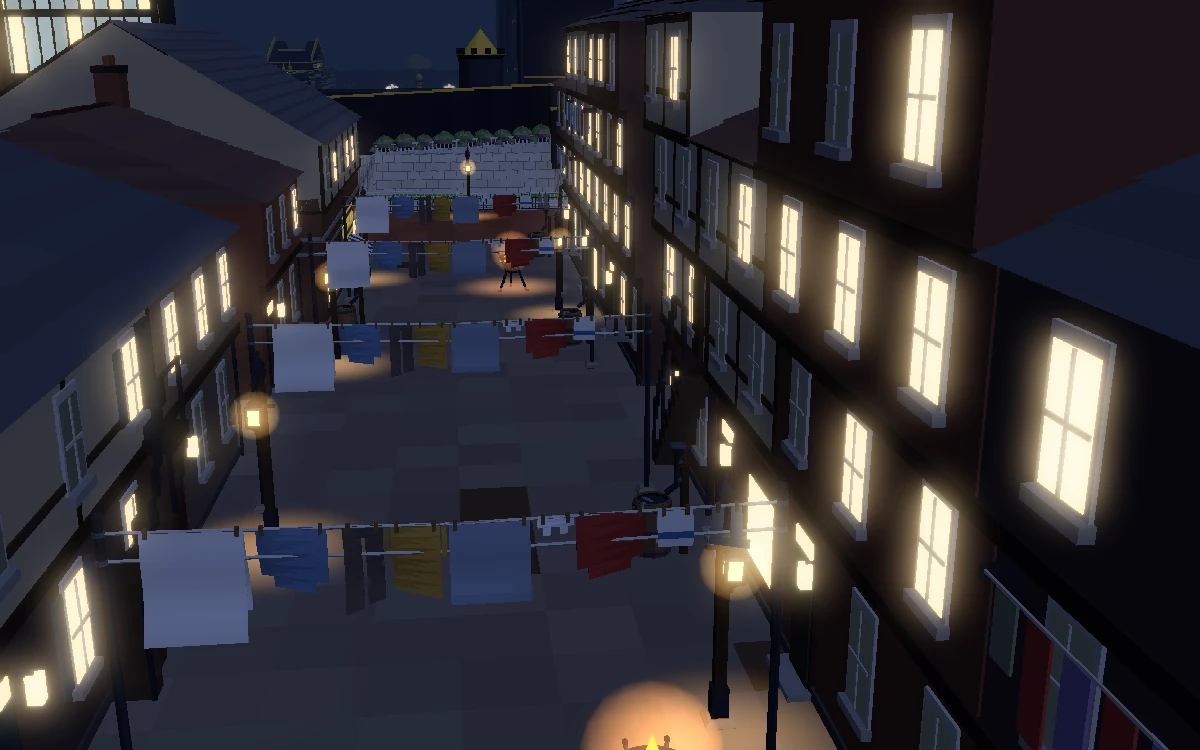
The other side of the River Rime is where the city’s staff live. Lowtown climbs its valley in terraces of soot-dark brick, the tenements three and four storeys high over cobbled lanes, with washing strung across them, oil lamps on brackets and the Society’s notices on every board. Lowtown Market has cheap stalls round its pump, with the tavern, the pawnbroker’s, the washhouse and the general store along its top, and the Lowtown Smithy has a public workbench.
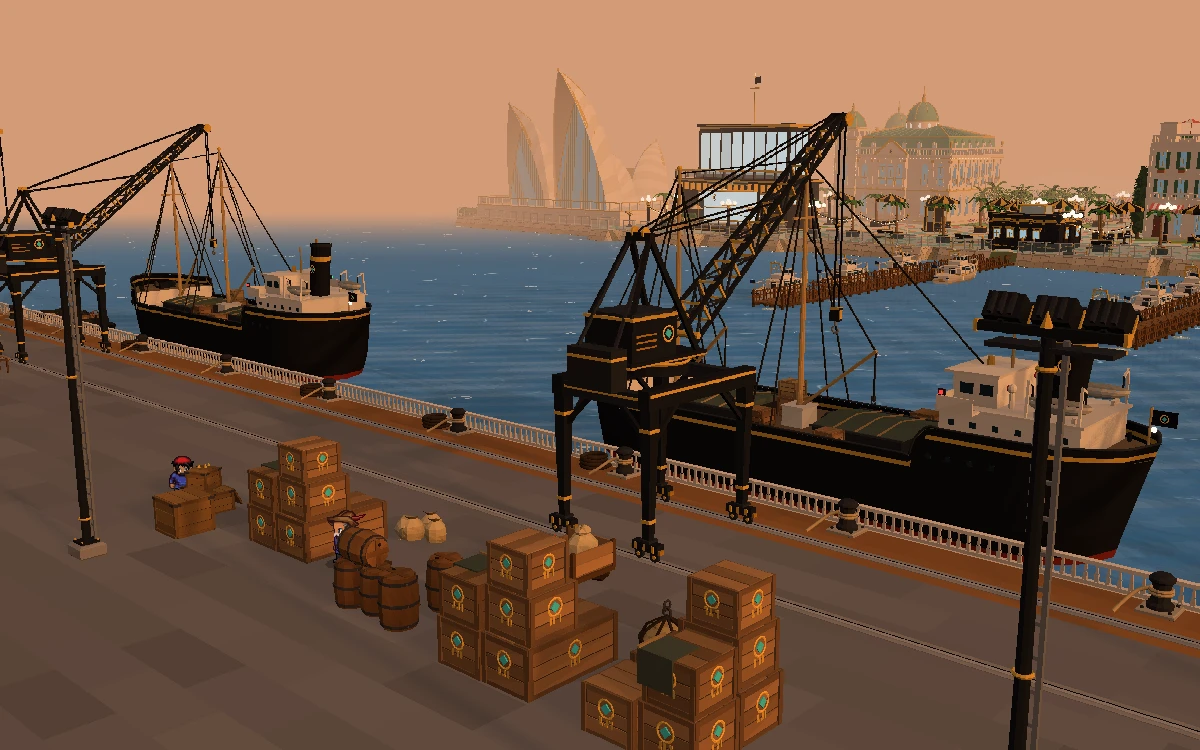
Below it are the Docks, the Society’s port, with black-and-gold cranes over the cargo ships and bonded warehouses along the quay. The Customs House’s counting room is a bank, the Cookshop on Dock Road has two public ranges, and from the Docks you can walk out onto the Flats for free shore fishing: oysters (and pearls) from Fishing 25 and crab from 45, with a fire on the shingle to cook your catch. Look out for the old wreck on the mud.
Up past the North Gate is the Works, the Society’s engineers’ yard, all gantries, cable drums and racks of glowing mana cells, where the Silver Line crosses the Rime gorge on the tall piers of the Rime Viaduct.
Halcyon’s furniture
Every part of the new city has its own look, and now you can take it home. There are six new lines of furniture for your room, each sold by a shopkeeper in the part of the city it comes from, and all of it free to buy.
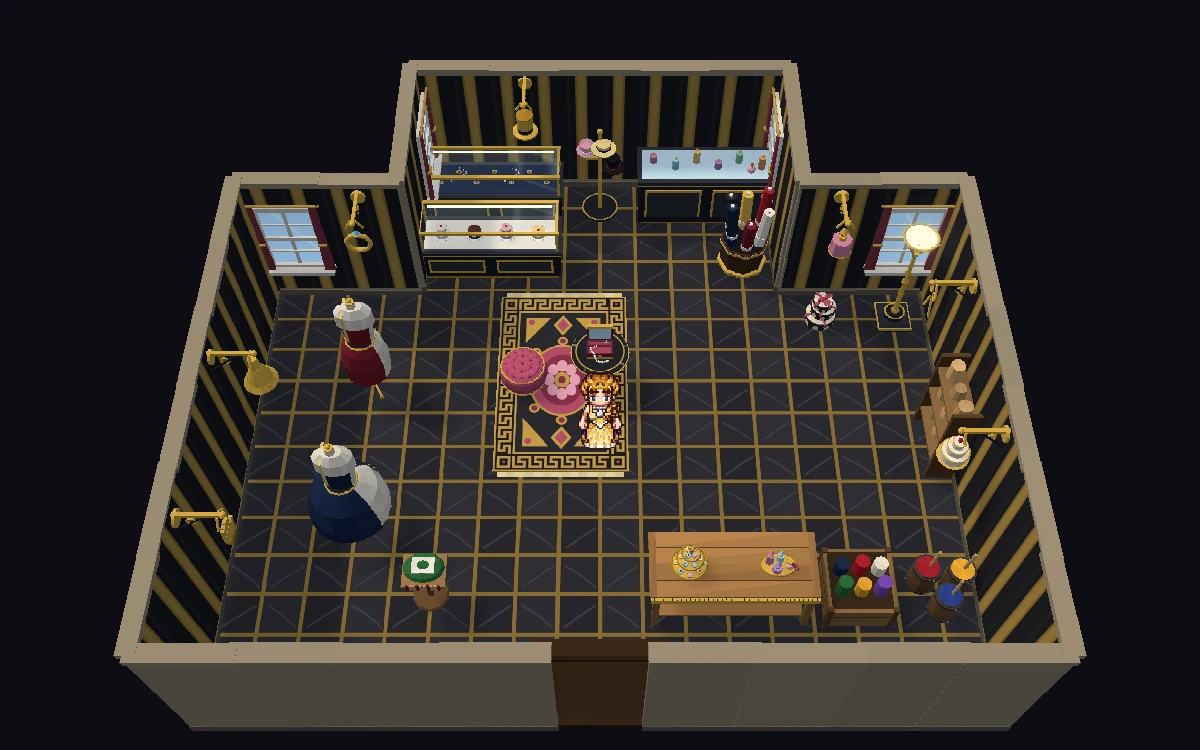
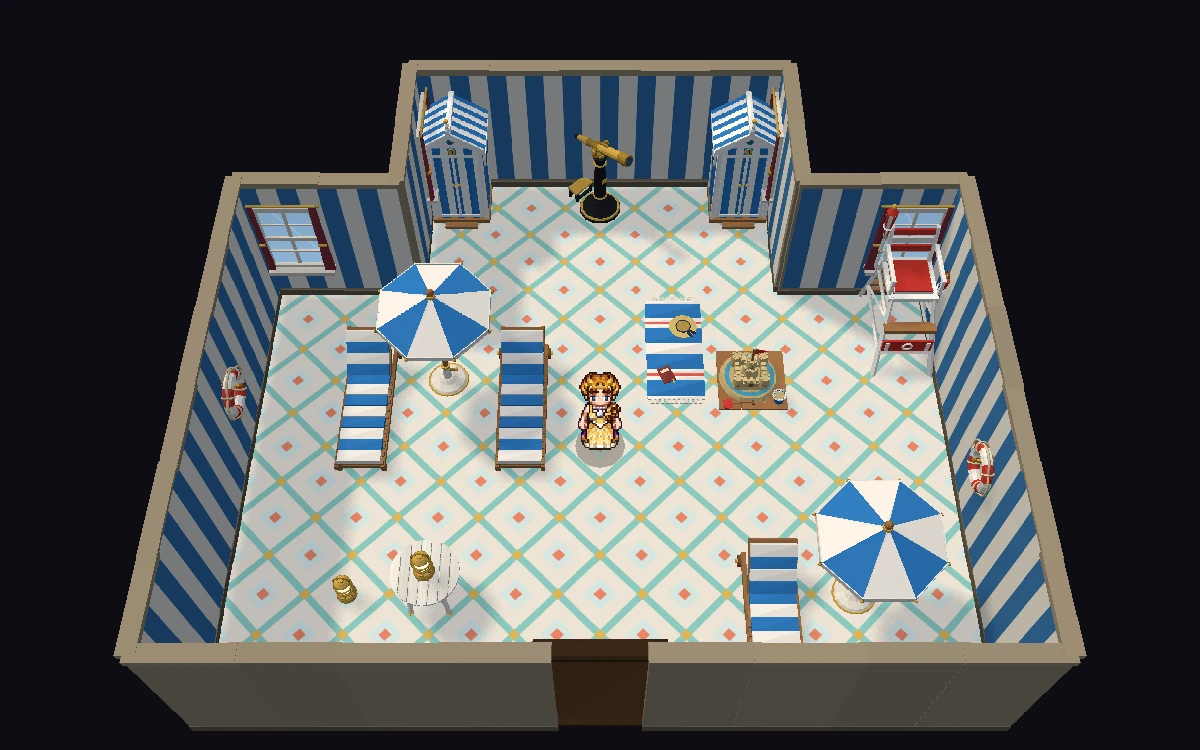
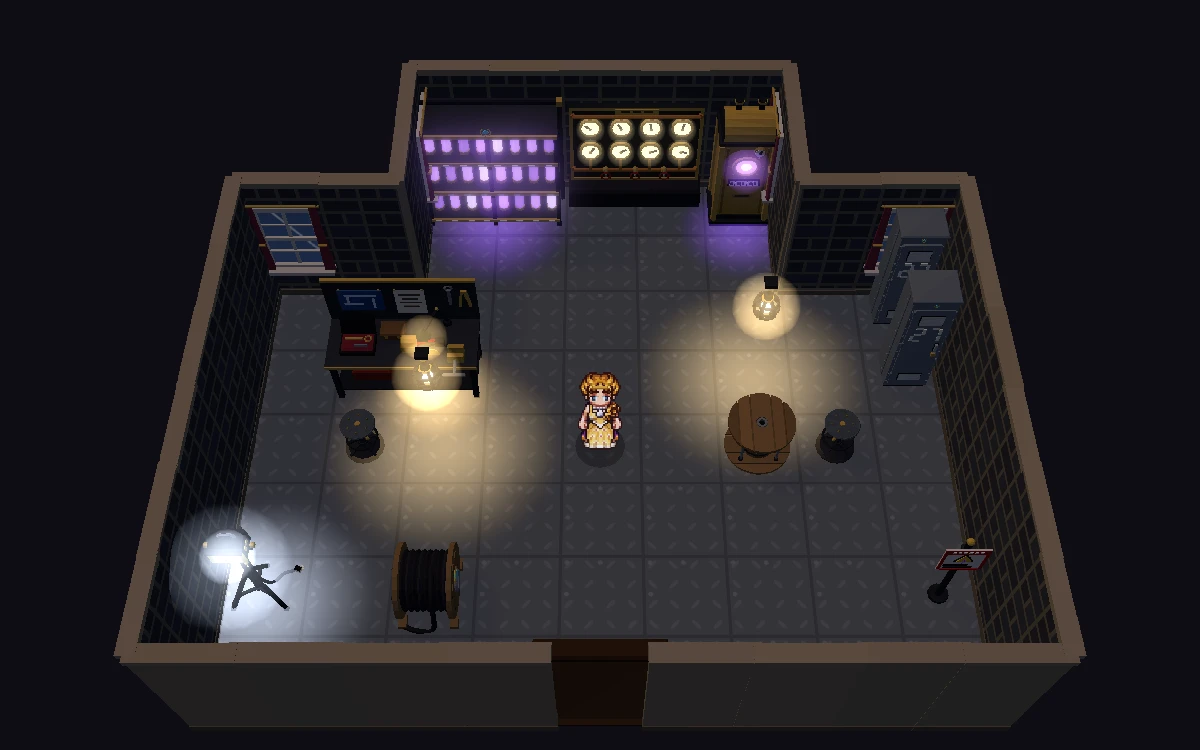
The Decorator and the Furnishings Clerk have moved out of the Grand Hotel’s Atelier too, into Halcyon Furnishings on Concord Boulevard. Same pieces, same prices.
Ravenscar Moor
East of the Gloaming there’s a whole new free region. Ravenscar Moor is open heather and moor grass, dark peat bogs and granite tors, with weather of its own: wind, drizzle, rain and the odd storm. Pilgrim’s Path crosses it from the Gloaming, past waymarkers and cairns, to the Ravenscar Stones, fourteen standing stones on the moor’s high tor with an old ruined beacon tower beside them. The River Tallow rises at a spring up here now and runs all the way down Tallow Gill into Tallow Vale.
It’s the highest land in the game. There are three fells, Raven Fell above Crow Tor, Giants’ Fell, the biggest, with a blanket bog on its top, and Brant Fell on the foothills’ spur, each with a path up past cairns to a summit cairn and a seat. The Moor Road forks north off the Tallow Cross road at a signpost and climbs past Highfold Farm to the Stones, then runs on east past the Halfway Shelter, a roofless ring of stone with a fire. Look out for the Tinkers’ Camp by the road, painted wagons and all.
The dark gaps between Thornwood, the Gloaming, Tallow Vale and the moor are filled in too. Old Thornwood is the deep heart of the wood, where bears roam and wolves hunt in packs in Howlers’ Dell, and the Burners’ Track climbs out of it to the Moor Road, so you can walk a loop from Tallow Cross and back. There’s mining on the moor: iron and coal on Cold Tor and Crow Tor, granite (Mining 30) on the tors, and mithril on Far Tor and Lone Tor, high on Giants’ Fell and a long walk from any bank. And there are trout and salmon in Tallow Gill.
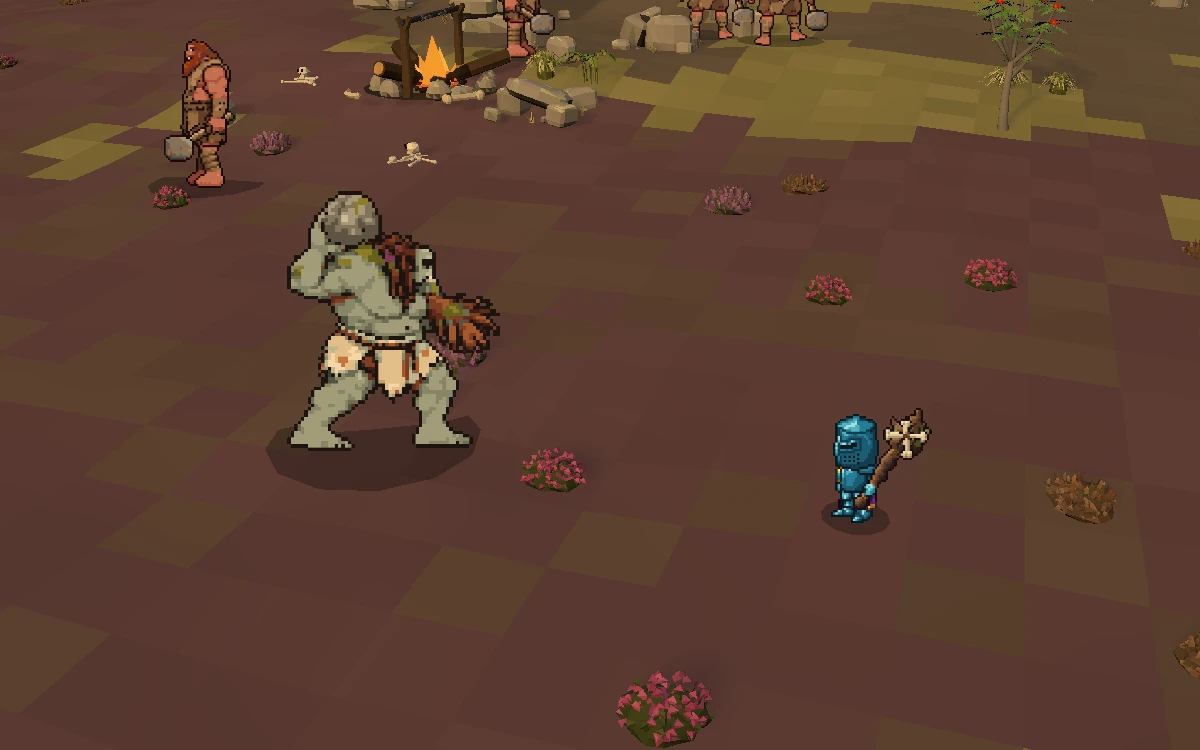
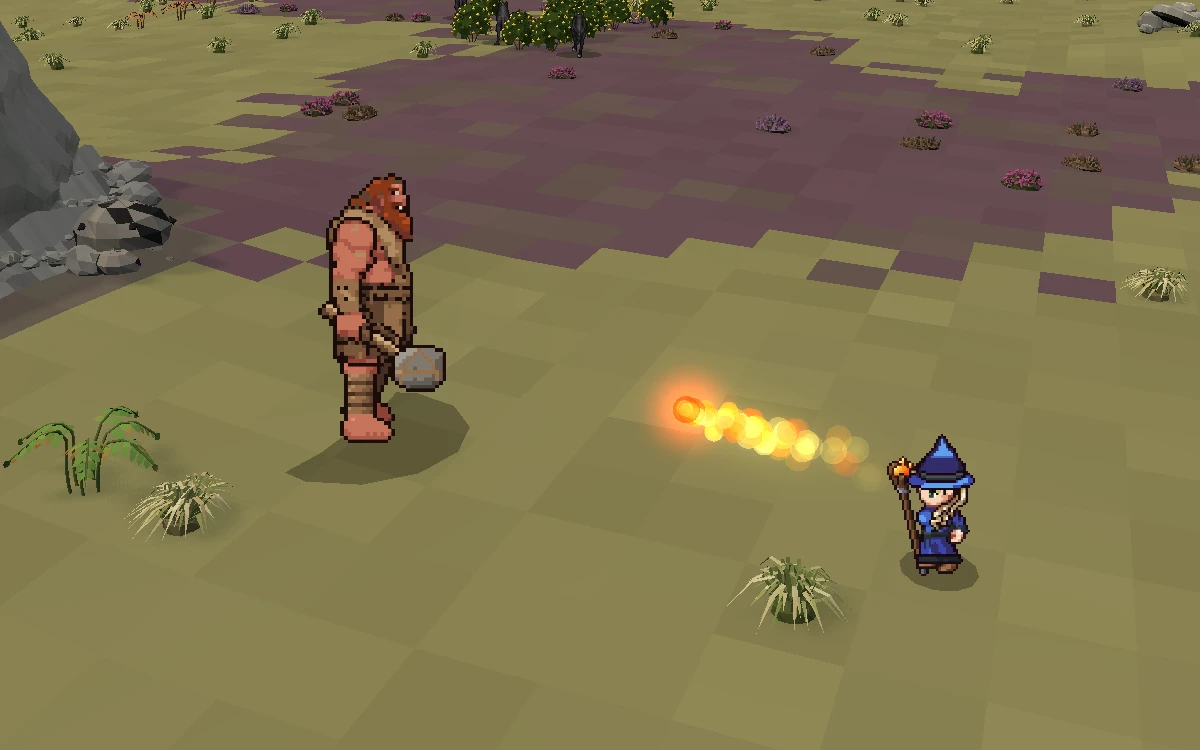
Then there’s who lives up there. Hill giants hold the tors and the crags of the fells, and moss giants, with their peat-cutters’ spades, live in the bogs. The ones to watch are the moor ogres: huge brutes who hurl boulders at you from five tiles away and club you when you get close.
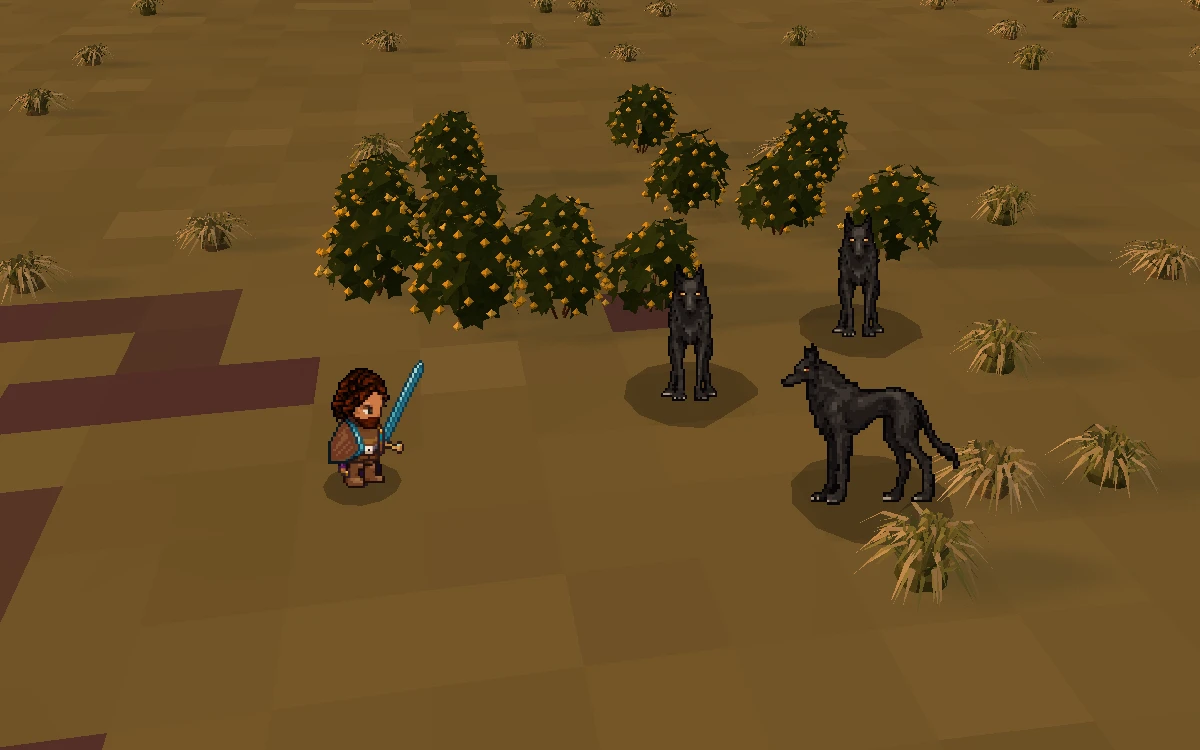
Black hounds hunt the gorse in packs of three, and they’ll run you down if you flee. They drop hound sinew, the string for willow bows, so willow bows can finally be made. Highway bandits work the Moor Road, some with crossbows and some with staffs that hurl a gust of wind. On the road they take you on one at a time. Walk into their camp south of the road and they all come at once.
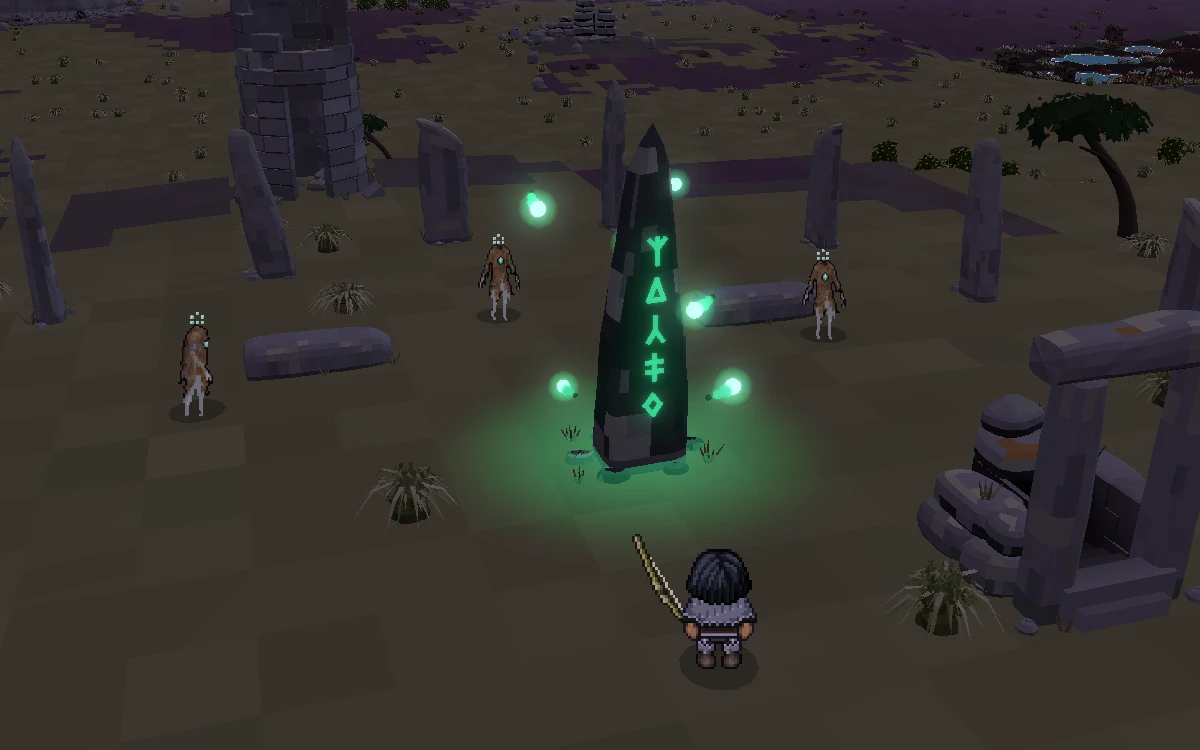
And the Stones have residents of their own. Wisp walkers are empty, tattered robes that walk on smoke, with a crown of wisps where a head should be. They pluck a wisp from the crown and throw it at you from six tiles away, and spells find them hard to hit, so bring a bow.
Every hill giant, moor ogre and moss giant drops big bones, and the ogres and moss giants carry a lost traveler’s steel and mithril gear, ore and gems. They also drop the pattern for the Ogre club: a two-handed club of knotted bog oak with big bones lashed across its head. It’s slow, and it hits harder than anything else a free Contractor can swing, at +80 Attack and +84 Strength. You need Attack 40 and Strength 40 to wield it, and you make it at a workbench with Artisanry 35.
Uniques like it work a little differently now. Reading a pattern still teaches you its recipe for good, but every one you make takes a rare part, which the same monsters drop about once an hour of hunting: bog oak heartwood for the Ogre club, the Alpha’s mane for the wolf hood, barrow silver for the barrow circlet, a mallard bill tip for the duck beak and golden down for the duck beanbag. Parts only drop once you’ve read the pattern, and you can trade them.
Magic and Scribing
Magic is open to everyone, and all of it is free to play. There’s a new Spellbook tab next to your gear, with the Strikes, Bolts and Blasts of wind, water, earth and fire, and teleports to Tallow Cross, Gullhaven and Halcyon. Pick a spell and click a monster to cast it, or wield a staff and set it to autocast from the Combat tab. If you’re not sure where to start, talk to the Wizard in his cottage in the Training Compound.
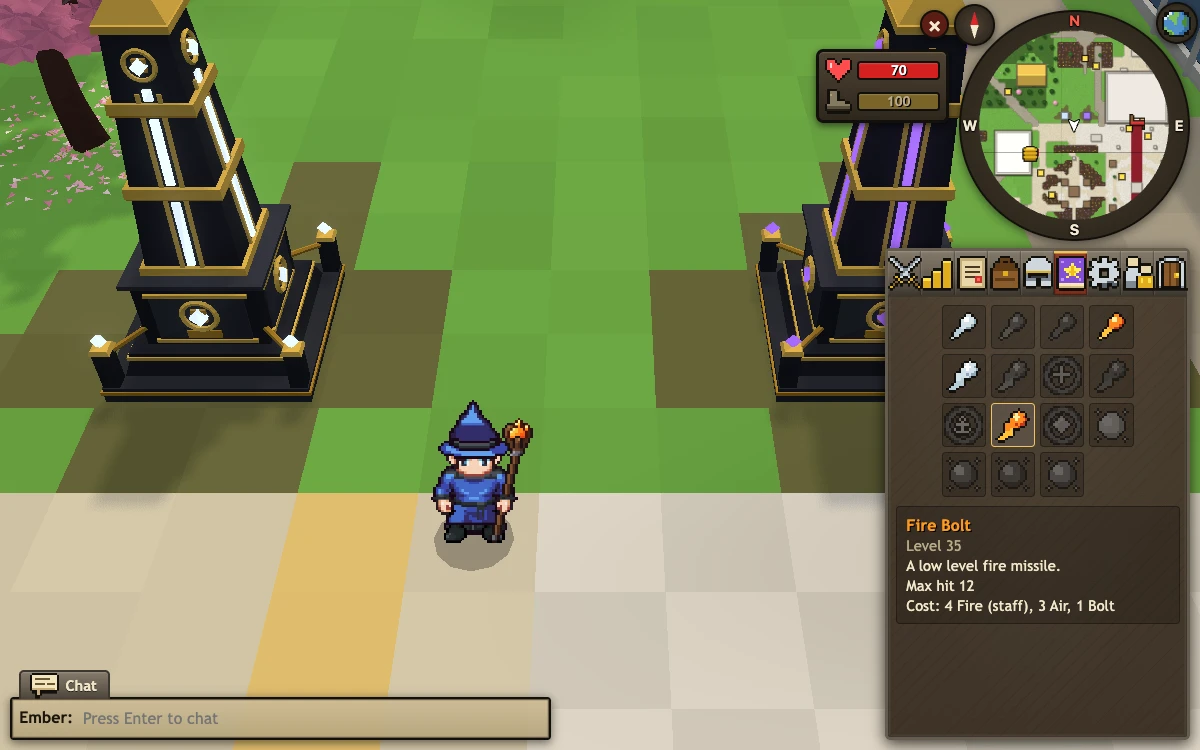
Spells aren’t free, though. A new skill, Scribing, pays for them. Every spell costs charges from scrolls: Wind Strike takes 1 Air and 1 Strike, Fire Blast 5 Fire, 4 Air and 1 Blast, and a town teleport a Passage. Hover a spell to see what it costs, and the ones you can’t pay for are grayed out.
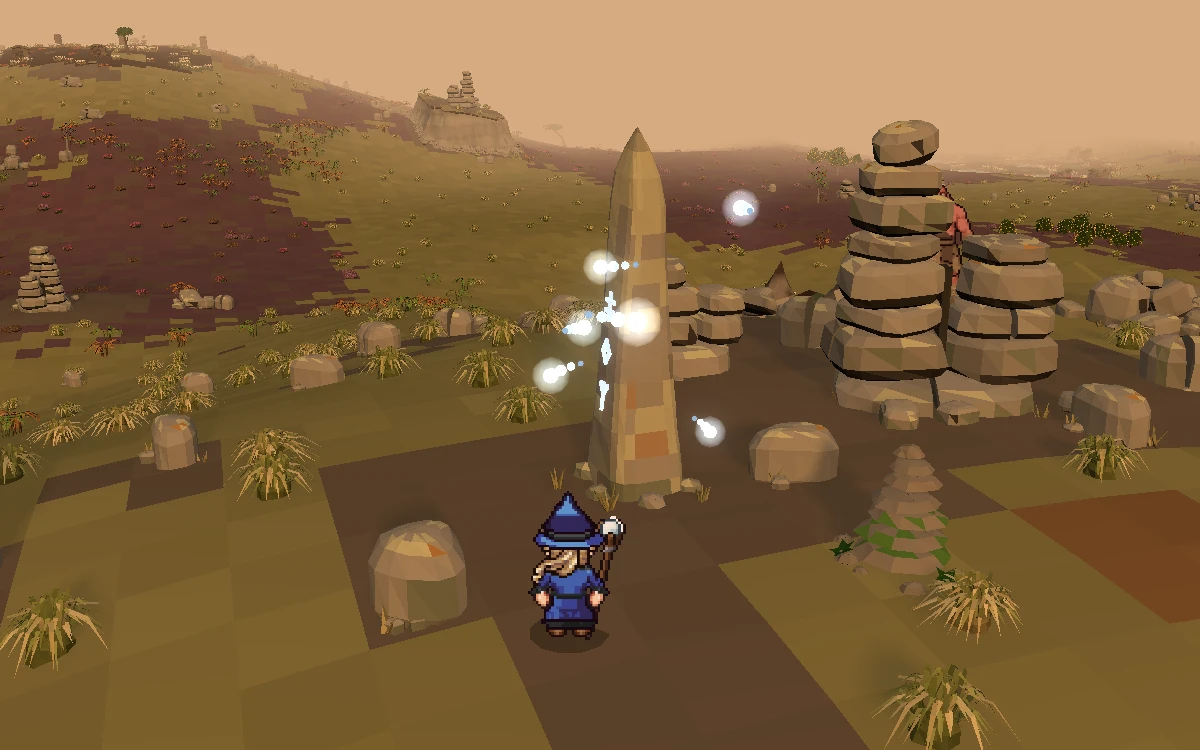
You write the scrolls yourself, at a writing desk. Scrape cowhide into parchment, steep oak bark into ink, cut a quill from five feathers, then write blank scrolls from parchment and ink. The desk in your own room is free, and the public ones in the banks and the Wizard’s Cottage take 5 coins a scroll. Then carry your blanks to an obelisk and charge them all in one go. A scroll holds 10 charges to start and more as your Scribing rises, up to 100 Air charges at 99.
There are thirteen obelisks around the world. The Society’s are tall black stone banded in gilt, with a crystal of mana turning over the tip, and they charge 2 coins a scroll: air and strike on the compound’s lawn, water in Gullhaven’s High Ward, earth in Tallow Cross’s Society Quarter, fire and bolt at Halcyon’s Central Station, and passage before the Society Exchange. The old ones are older than the Society: lichened standing stones whose runes shine with mana, wisps drifting round them. They’re free, if you can get there. You’ll find them on Raven Fell’s summit, on Pincer Pools’ headland, on Tinker’s Knoll, by the pilgrims’ chapel, deep in Penhale’s Hold, and in the middle of the Ravenscar Stones, the only place with blast mana.
Ambrose the scribe has set up in the Wizard’s loft. He sells Air, Water, Earth, Fire and Strike scrolls, a little Bolt, and parchment, ink and quills, a few at a time. He won’t sell Passage or Blast, so those are yours to charge, or to buy from someone who has. No shop buys scrolls back, so sell yours to other players. Monsters carry a few charges now and then too, of whatever they’d plausibly have on them, but that’s a nice find, not a supply.
Armor matters to a caster. Heavy armor spoils a cast: a platebody takes 30 off your magic attack, and in full plate every spell splashes. Armor also defends against blades, arrows and spells separately now. Plate stops arrows as well as blades but lets spells through, a ranger’s hides stop arrows better than blades, and casters stop few arrows. Every monster has a Magic level and magic defense too, so most fighters are easy to hit with spells and casters are hard. The Gear tab and item tooltips show all three, and Magic now counts toward your combat level.
Robes and staffs
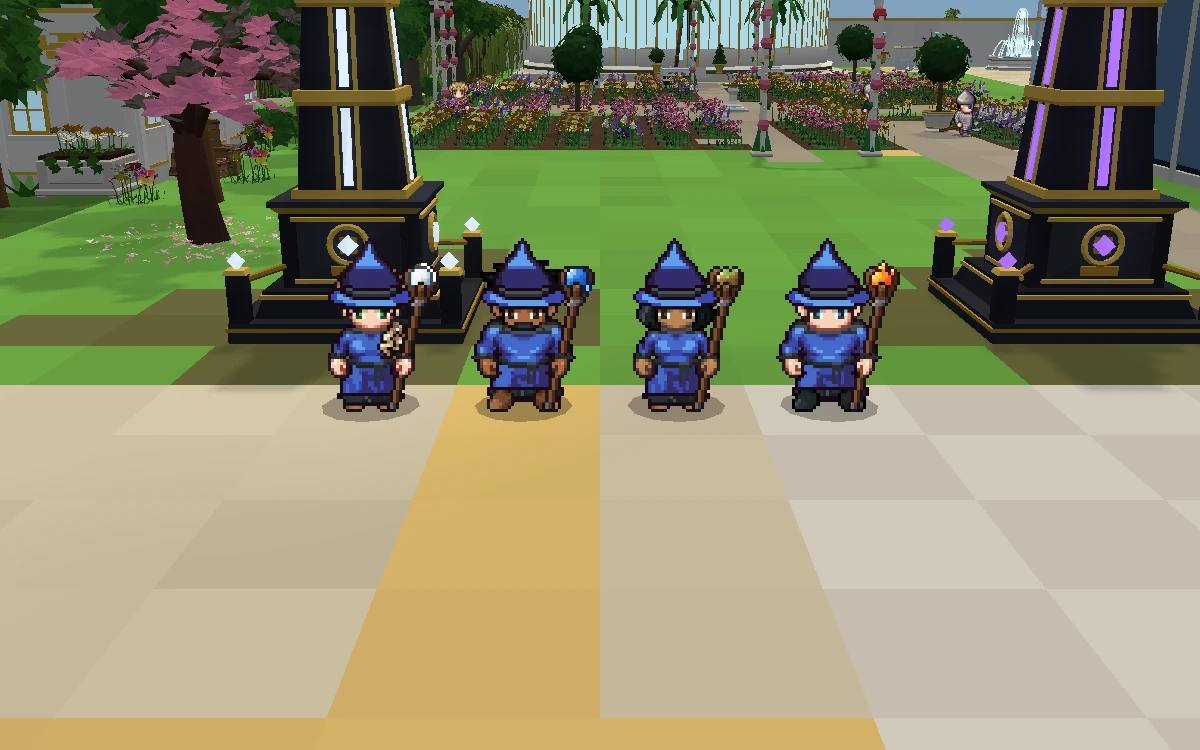
A mage needs the look. The wizard robes are a blue robe top and bottom trimmed in black, to wear with the wizard hat. The set adds +7 magic attack and +8 magic defense, and nothing at all against blades or arrows, so keep your distance. You make them at a workbench from wool cloth and ink: the hat at Artisanry 10, the bottom at 13 and the top at 16. The Wizard sells staffs downstairs from Ambrose: the Staff for 15 coins and the magic staff, +10 magic attack, for 200.
The elemental staffs are the ones to have. A staff of air, water, earth or fire gives you endless charges of its element while you wield it, so with a staff of air, Wind Strike costs only its Strike and every town teleport’s Air is free. To make one, make an unpowered orb at a workbench (Artisanry 20) from 2 sandstone and a wisp walker’s crown wisp, charge it at an obelisk of its element (Scribing 21 for air, 25 for water, 29 for earth and 34 for fire), then set it in a magic staff at the workbench. The crown wisps go into the sapphire star amulet now too, glowing behind its sapphire.
Upwind
The Marina Club in Gullhaven would like the fish market moved somewhere downwind. For the air. The Club’s secretary, Mr. Carlyon, needs a Contractor to serve the notice, and you’ll find him with his papers just inside the High Ward’s gate. It’s a longer errand than it sounds, and how it ends is up to you.
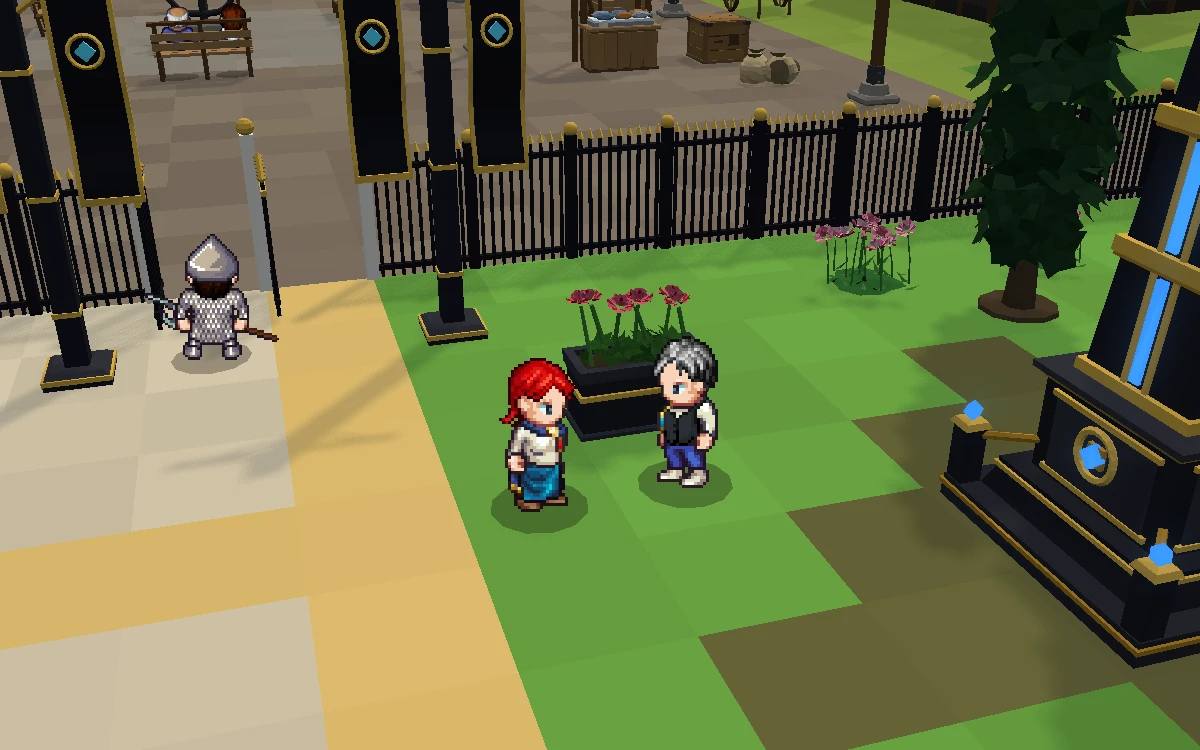
While you’re in Gullhaven, the Harbormaster’s office on the north quay is open, and the Fishmonger has set up at the fish market. He sells the morning’s catch across his counter, from shrimps to crab, while it lasts: when a fish sells out it’s gone for everyone until the next boat comes in. He’ll buy your raw catch too.
Artisanry
I went over every Artisanry recipe. From Artisanry 20 up, a piece takes materials from more than one kind of work, its best material comes from near its own level, and a better tier never asks for less than the one below it. No more level-45 loveseat made of plain logs.
Some materials you now gather with Artisanry itself, no tool needed. Pick flax in the plots on Highfold Farm and Lowfold Farm (Artisanry 1), collect beeswax from the farms’ hives (10), and shear any sheep for wool (1). The patches, hives and sheep each need a little while to grow back. Chopping oak strips off some bark now and then, too. At the workbench, under Materials, those become bowstrings, balls of wool and wool cloth, beeswax candles, leather tanned with oak bark, and silk thread from spider silk.
They go into a lot. Bows need a string now: a bowstring for plain and oak bows, the black hounds’ sinew for willow and the barrow wights’ for walnut. Steel gear and up takes a leather grip or a wool cloth lining, the ranged armor from hardened leather up adds beeswax or bars, the stone fireplace and the iron range are built of moor granite, and every lantern takes a beeswax candle. Pieces whose materials cost more are worth more, too.
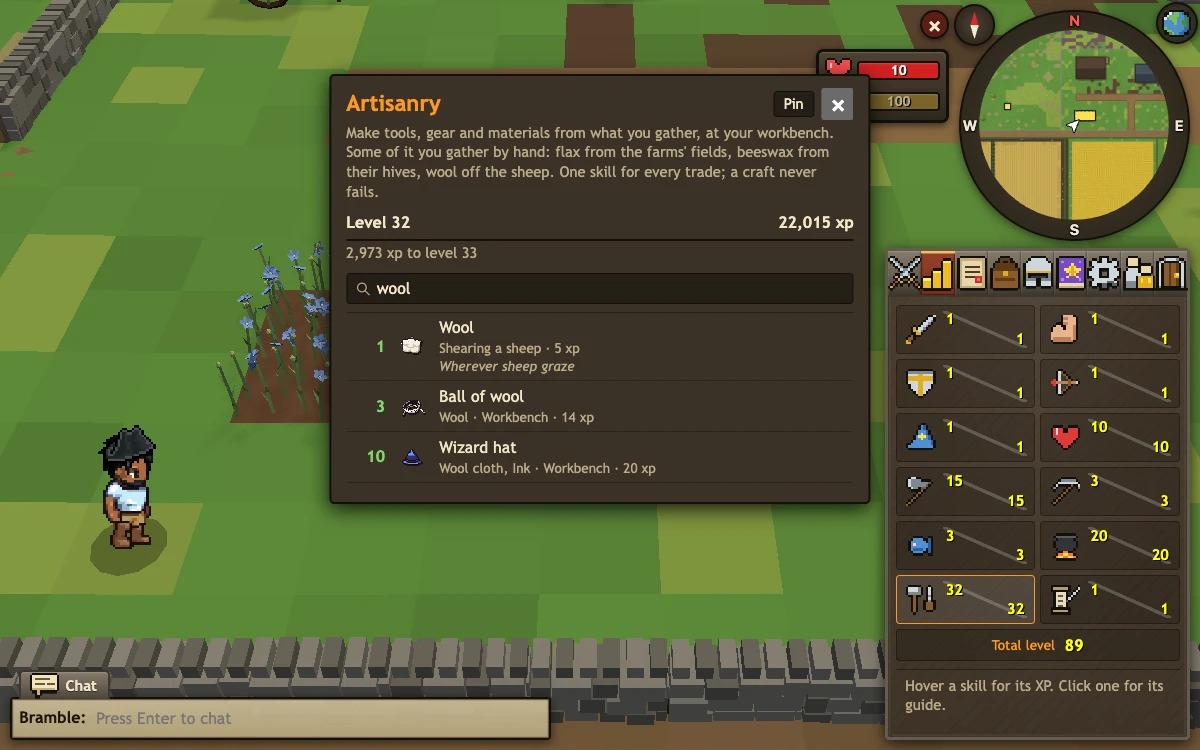
With all that, the Artisanry guide got a search box. Click Artisanry in the Skills tab and type a recipe’s name, a material or a level.
One more thing for the hide crafters: wolves and brown bears drop their pelts one kill in twenty now, and the Alpha Wolf still always drops two.
Dying
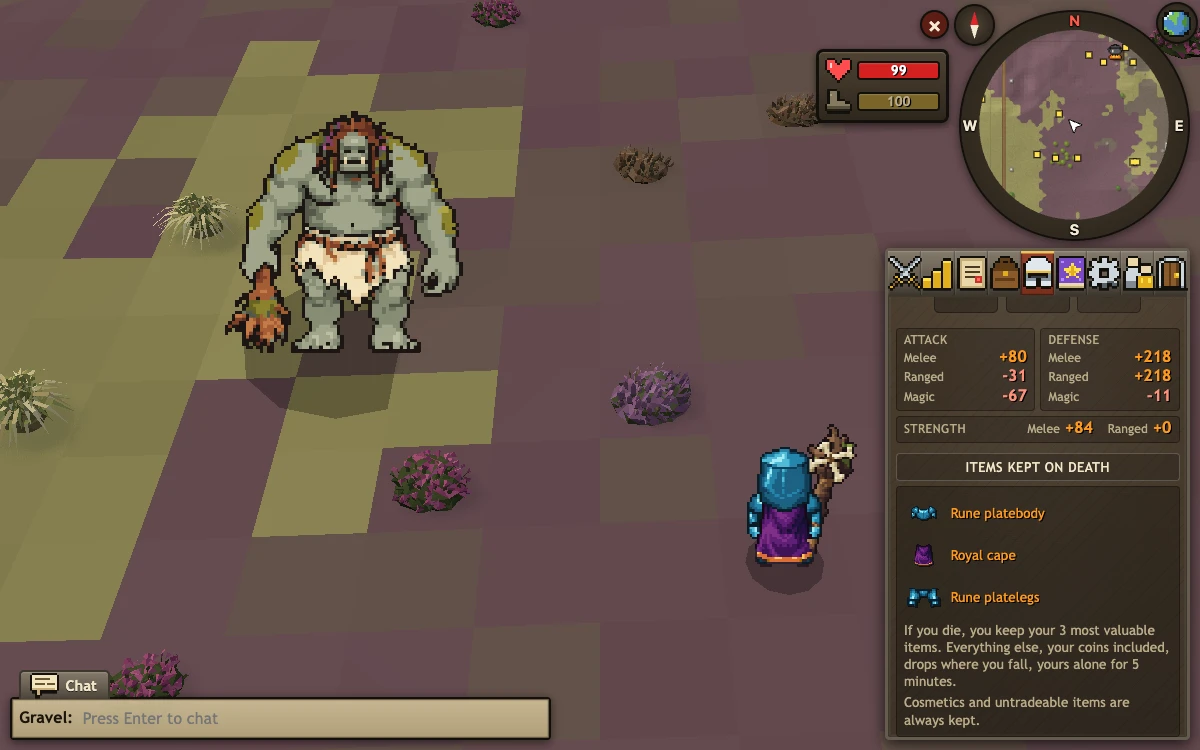
Dying costs you now. You keep your three most valuable items (a stack of arrows counts one arrow at a time), and your cosmetics and untradeable items are always kept. Everything else drops where you fell, coins included. It’s yours alone for five minutes: a gravestone marks it on your minimap and the World Map, and hovering it shows how long you have left. After that anyone can take it for a minute, and then it’s gone.
You can have up to five piles waiting. Die a sixth time before you’ve collected them and your oldest crumbles away. Items kept on death, in the Gear tab, shows which three you’d keep right now, so check it before you go somewhere dangerous. A seat you’ve set down folds up when you die and counts like anything else you carry.
And the rest
The Training Compound. The pond has perch now, which move between spots and vanish for a few seconds before surfacing at the next, and Silverlake’s reeds have the trout. Every goblin pen holds goblin recruits, and there are fewer guards: the Society’s Enforcers and Captains have moved to Halcyon, where the city’s gates and the Exchange now have the toughest guards in the land.
New Contractors. Contractor’s Probation gives Artisanry XP now instead of Attack and Strength, so you can build a pure from day one. You stay in the Training Compound until you’re signed off, spells or no spells: the town teleports are grayed out until then.
The minimap. Flax patches and beehives show as yellow dots while they have something to give, and your friends show as green ones.
Combat levels. In the right-click menu and when you hover, a monster’s or player’s level is green when they’re weaker than you, yellow when you’re even and red when they’re stronger.
Spiders. Cave spiders and giant spiders now poison you, one bite in five.
The bear onesie now covers your legs, feet, hands and belt, as a onesie should.
Teleporting out. Log out during a town teleport and you’ll still wake up in the town, since you’ve paid for it. And if you logged out somewhere in the old Halcyon that isn’t there any more, you’ll wake before the Gold Lens.
That’s everything. I’ve loved building the new Halcyon, and I hope you love walking round it. See you on the Water Steps.